On this page you will find an overview of how English is taught at Emsworth Primary School.
Our learning journeys develop the children’s skills through a combination of three phases. The culmination of these lead children to create high quality written outcomes which link to an over-arching theme or unit of work. Our aim is for the children to take pride in their writing and we feel that our learning journeys provide an opportunity for them to demonstrate our core values – Enjoy, Persevere, Succeed – as they work through the process of planning, editing, refining and proof-reading their final written outcomes.
Each learning journey begins with a ‘stimulate and generate’ phase. At this stage, children are hooked in by images, props, visits, visitors, video clips and immersion into rich texts which link to other areas of the curriculum. Spoken language is developed through discussion, drama and oral rehearsal and through making links to personal experiences and cross-curricular learning. Purposeful links to texts shared during guided reading provide an additional opportunity for the children to make relevant links and broaden their vocabulary further.
The second phase of the learning journey provides opportunities for the children to explore rich texts in more depth and to ‘capture, sift and sort’ language, structures and grammatical features of high quality model texts. At this stage, children are given opportunities to hone new knowledge and skills through directed tasks as well as through modelled and apprentice writes. We ensure that the children are appropriately supported and challenged at this crucial stage in a variety of ways: through investigating and experimenting with core structures and grammatical features; carefully modelling how to apply these to new contexts and providing scaffolds as children practise them independently. The exploration of these model texts also allows children to generate success criteria, which can then be used for support during the final stage of the learning journey.
Finally, we move onto the ‘creating and refining’ stage of the learning journey. This is when children are expected to apply their acquired knowledge and skills through planning and creating their own writing outcomes. At this stage, children will refer back to modelled and apprentice writes and continue to draw on their knowledge of the model texts in order to support them with their independent writing. Throughout this stage, the children are given opportunities to evaluate the effectiveness of their writing through peer and self-assessment. They are also encouraged to access a range of resources to support technical accuracy in spelling and to support them when proof-reading and editing their writing.
As a result of our carefully planned learning journeys, the children are able to select high-level language and rehearse grammatical elements of writing before integrating them into their final writing outcomes. They make meaningful links to their learning in other areas of the curriculum and can apply the skills they have learnt when reading and writing in other subjects.
As children progress through the school, they are increasingly able to make decisions about how best to publish and present their work. These published outcomes are celebrated across the school through our displays and children feel proud to share their learning with others. The children are always especially excited to be rewarded with a Headteacher’s sticker when they visit to share their writing and photographs of these moments are shared with parents via our newsletters.
In order to ensure that our curriculum is tailored to the children, we like to regularly review the texts and experiences that inspire our learning journeys. Please click on the link to see our current long term map for English.
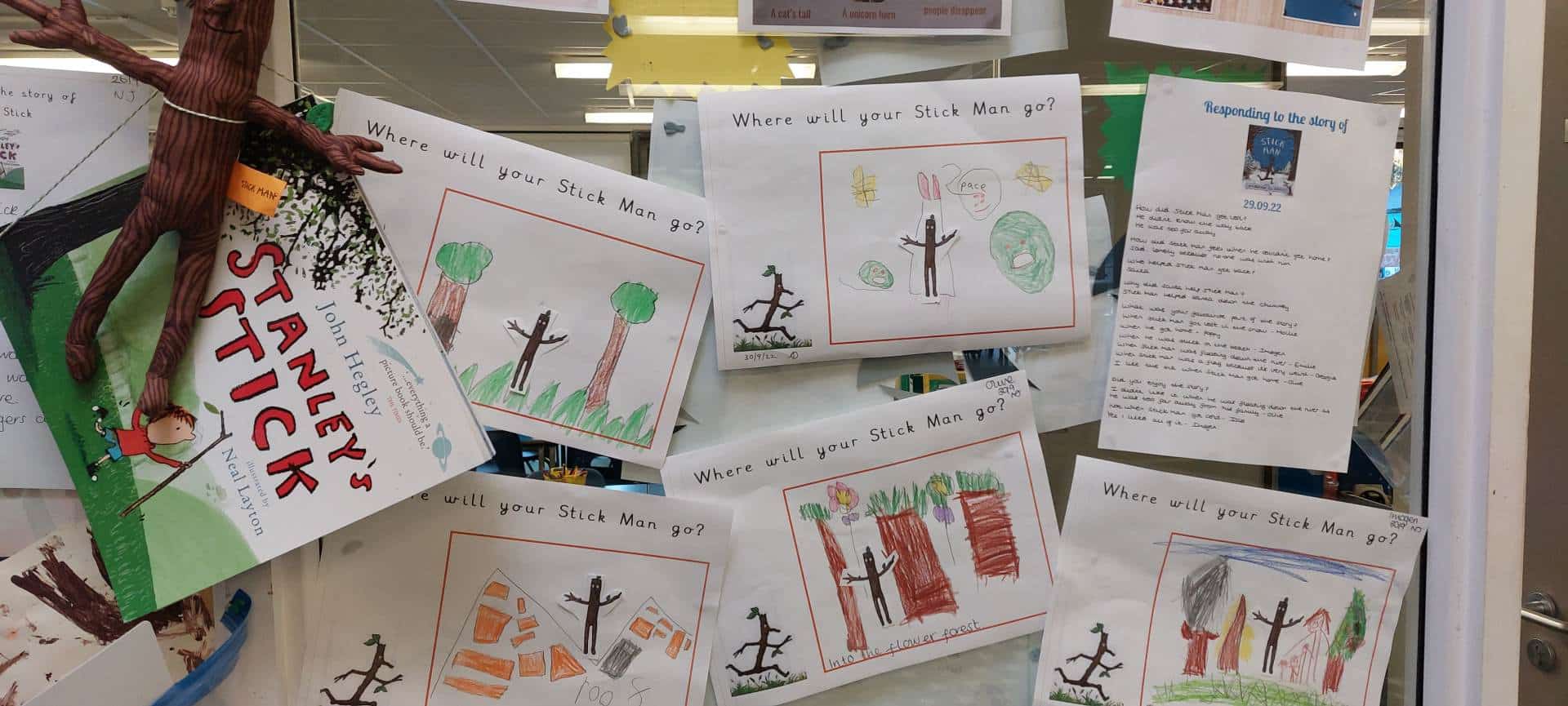
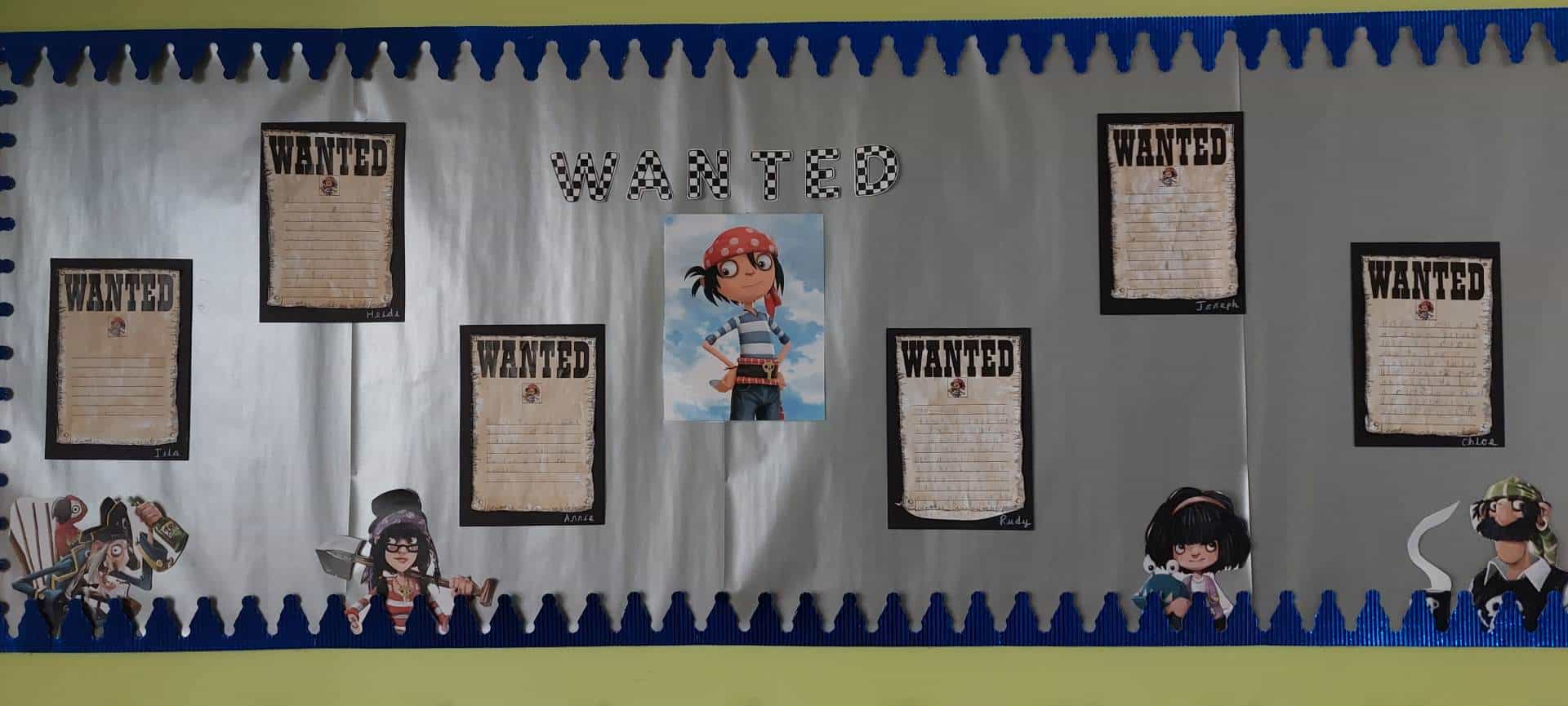
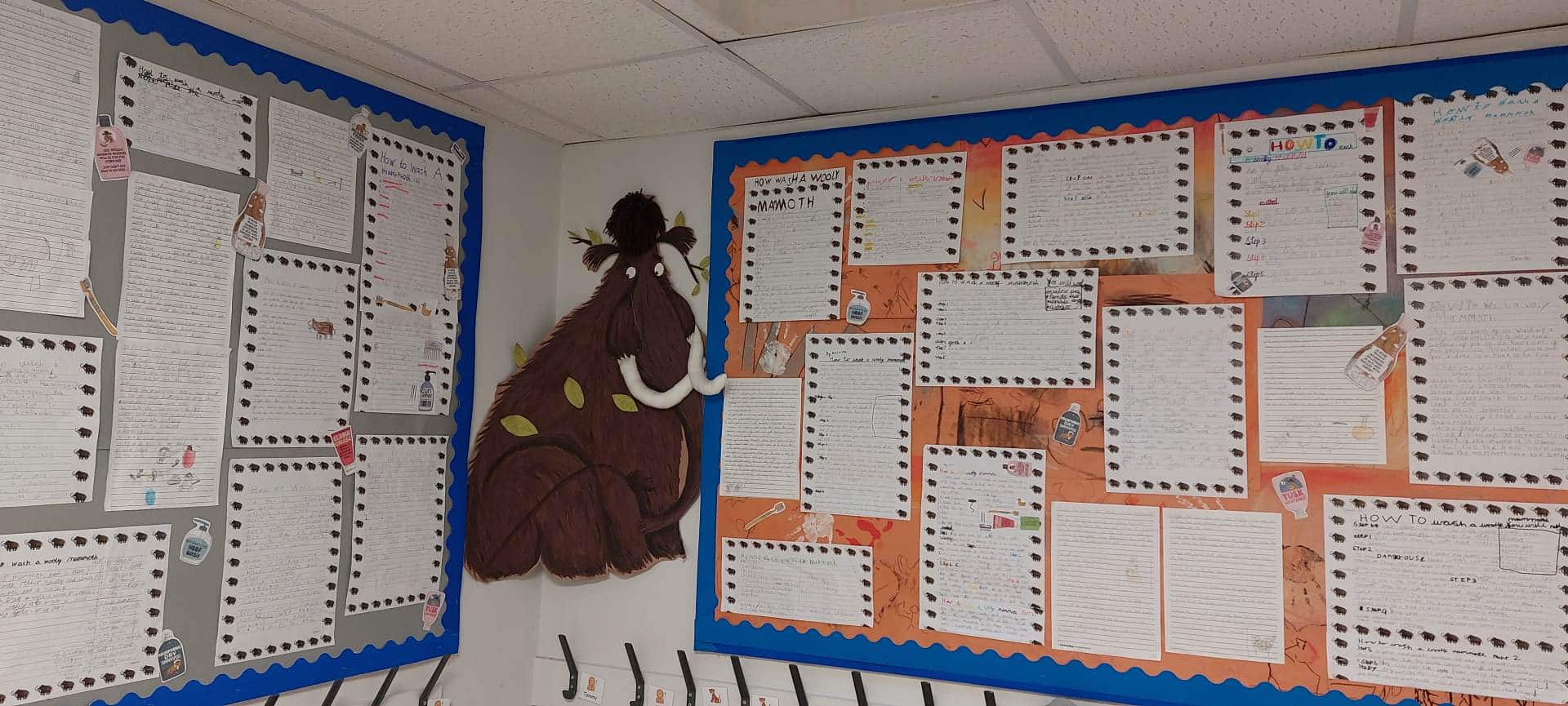
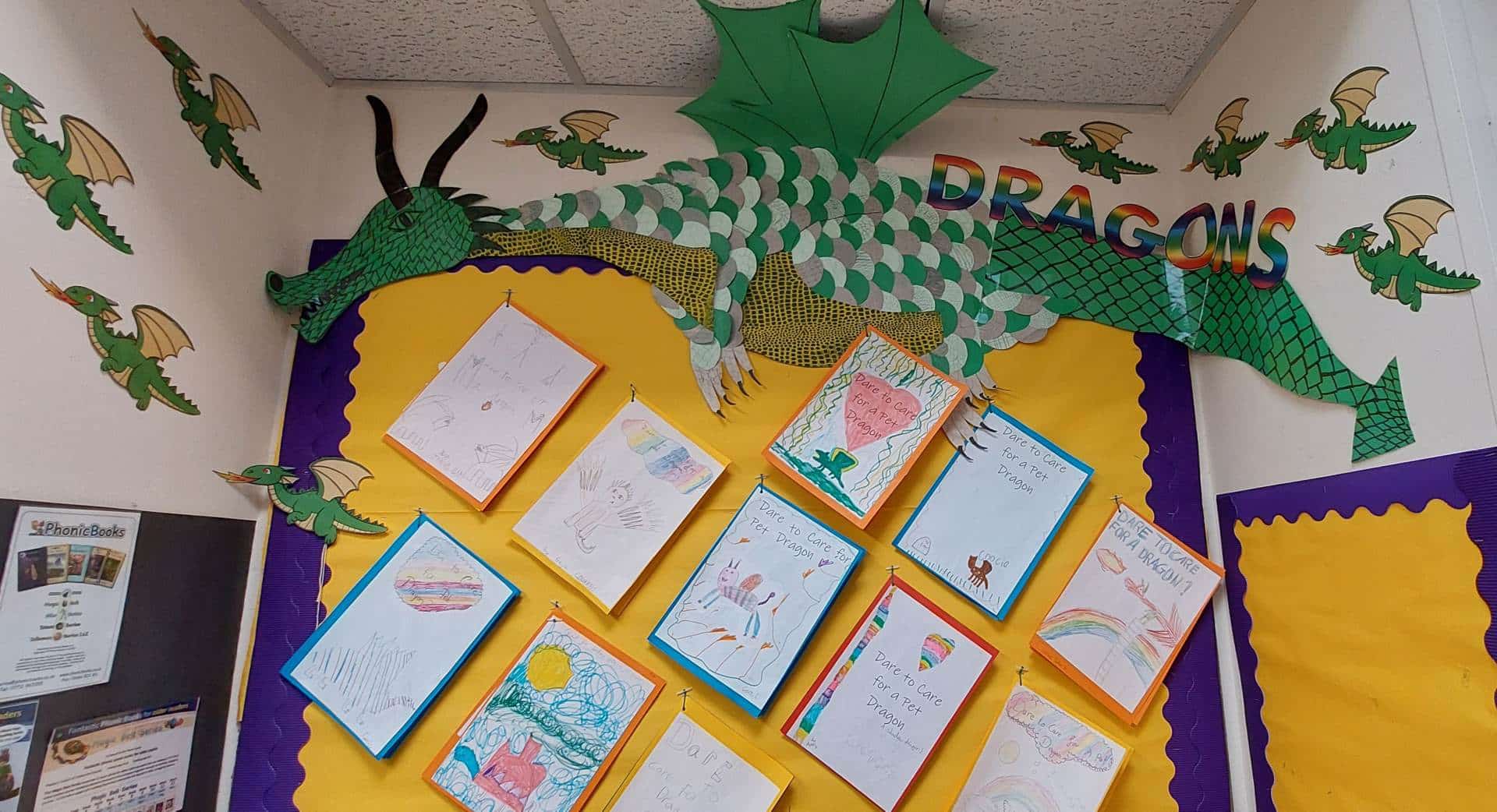
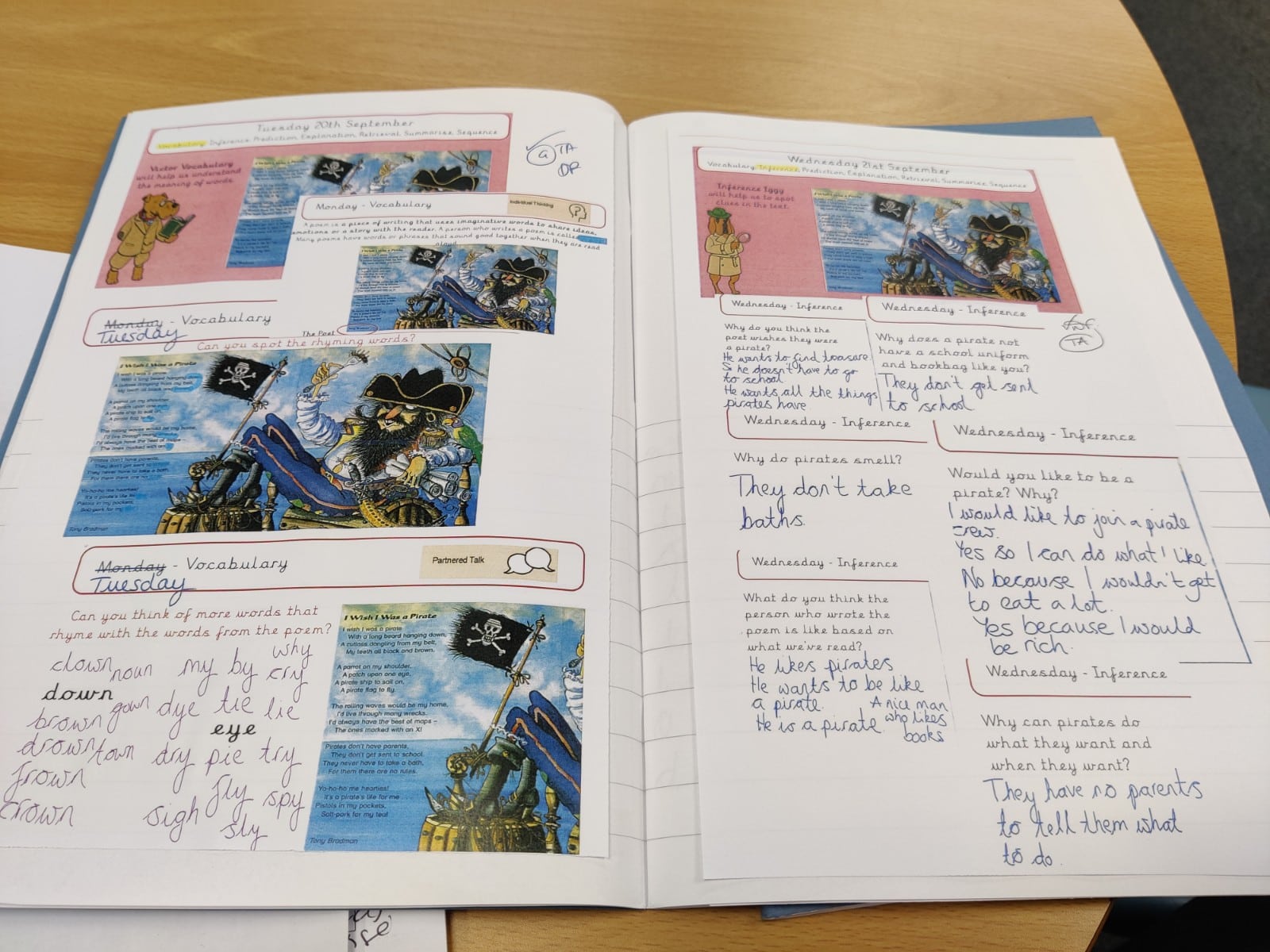
Below you will find a selection of published pieces of writing from across the school. The children love to see their work on display and take great pride in publishing some of their written outcomes.
Follow the link below for access to the National Curriculum content for English:
It is our intent for every child to leave Emsworth Primary School as a competent reader. We strive to develop each child’s love of reading as well as building reading mechanics through a systematic synthetic phonics approach. We want learning to read to be an enjoyable process for every child and we deliver Bug Club Phonics lessons that are highly engaging and inclusive for all. Our reading curriculum is broad and diverse, exposing our children to high quality literature and cultural themes. We support children’s reading journey through a multi-dimensional approach, giving children access to Bug Club texts, online books, our library service, Lexplore interventions and assessment.
We begin our implementation of reading through our systematic synthetic phonics programme- Bug Club Phonics. The programme follows an approach of synthesising phonemes associated with the graphemes a child sees; or quite simply, learning to read by blending the sounds associated with the letters a child sees. The programme is the product of extensive research on the best way to teach children how to read. Bug Club Phonics is a focus in Year R and KS1 however continues throughout KS2 if children require further phonics teaching. Bug Club Rapid is a subsequent programme delivered to children who require further support. Bug Club Guided Reading and Comprehension sessions are delivered throughout the school. Children are able to take home independent texts at an appropriate level to supplement their in school curriculum. Children learning phonics take home a decodable text which they can read and re-read with a parent to embed phonics teaching. Lexplore Reading Screening is carried out at multiple assessment points throughout the year in order for teachers to have accurate attainment for every child and plan their next steps to becoming a competent reader.
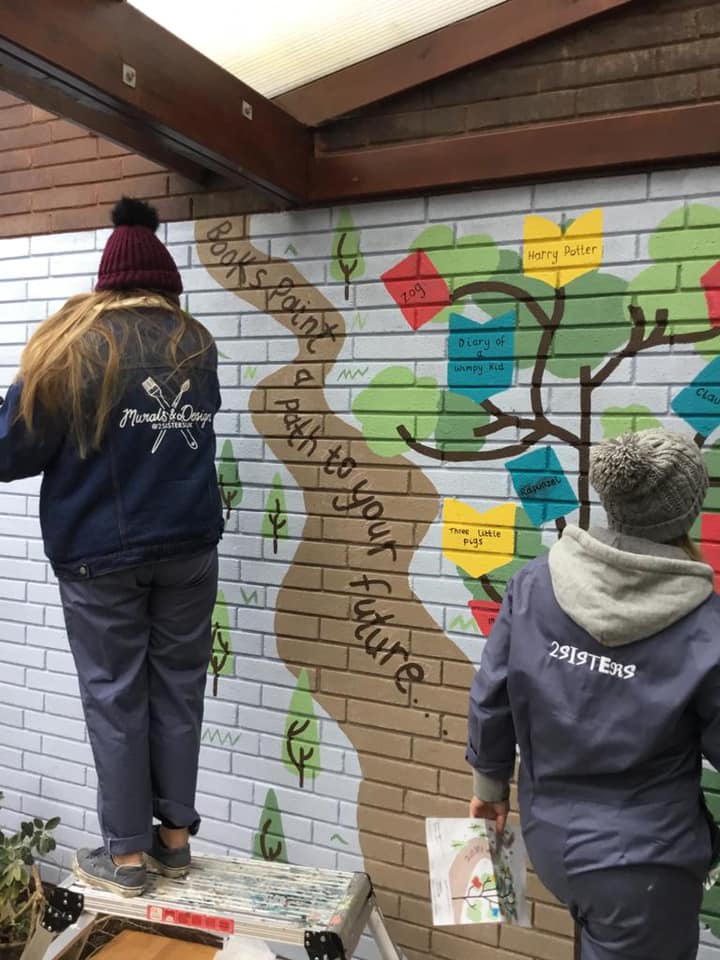
The impact of our reading curriculum will enable every child to finish KS2 as a reader. We help children to discover a love of reading by placing literature at the heart of our curriculum. Our reading strategy combines the Bug Club Programme with rich text drivers and diverse guided reading curriculum. Our whole school reading ethos resonates throughout the school with reading incentives, reading celebration displays and reading areas in every classroom. All of the children value and make use of our library, added to in 2022 with a wonderful outdoor reading area where the children can enjoy a calm reading environment with access to cultural texts.


Learning to read
We have chosen to use the Bug Club Phonics programme to help your child learn to read. The programme follows an approach of synthesising phonemes associated with the graphemes a child sees; or quite simply, learning to read by blending the sounds associated with the letters a child sees. The reading books your child brings home are designed to support them in practising and consolidating the learning they do at school. They also enable children to experience the pleasure and pride of reading their own books. All the books in Bug Club Phonics have been finely-levelled to ensure that all children can read books at exactly the right level for them. There are also online versions for every printed title and a personalised website for each child. We change the phonetically decodable books once a week. This gives you the opportunity to read and reread the text with your child and help them to consolidate the phonics learning that is taking place in school. We ask for your cooperation in caring for the books and returning them weekly so that we can issue your child with their next book. We will continue to build our library of decodable reading texts but need every book returned before new ones are issued.
Using the printed books
Inside every Bug Club Phonics printed book, there are notes to help you make the most of reading with your child. Inside front cover: there are suggestions of activities before your child starts reading, such as saying the sounds and practising blending them to make words, as well as strategies whilst your child is reading to you; for example, checking their understanding of the story or information on the page. Inside back cover: the activities here are to help your child consolidate what they have read and increase their fluency.
Using the online reading world
If you have access to an internet connection, your child can enjoy reading Bug Club Phonics books online as well as in print. Each child has a unique homepage and can log into it by following these steps:
Reading a book online
We allocate books to your child according to their reading levels. These books will appear in the ‘My Stuff’ area of their personal homepage. The eBooks have three main additional features to help your child. Find them in the ‘Independent’ section of ‘My Stuff’.
When your child has finished the book, clicked on the phoneme pronunciation guide and attempted the quiz question, they will earn ‘ActiveLearn Coins’. By reading more books, your child will earn enough coins to ‘buy’ a reward in one of the many reward schemes.
When your child has finished a book, it will move to ‘My Library’. Children can read these books again if they want to, or they can choose new books from ‘My Stuff’.
Sharing reading
When sharing a book with your child, try to take opportunities to talk about the book – before, during and after reading. Before reading: look at the book cover and talk about your child’s expectations. Is the book likely to be fiction or non-fiction? Have you read other books together about these characters or by this author? What does your child think the book is going to be about? While reading: support your child when unknown words need tackling: you can sound them out, split them into syllables, or identify suffixes and prefixes. Remind your child to listen to the words while reading them, to make sure that they make sense. Have a ‘meaning check’ every now and again to ensure that your child understands the text. After reading: talk about the book. What was it about? Did it match your child’s expectations? Ask questions beginning with the words how and why to check that your child has been able to read between the lines. Ask whether anything seemed puzzling. Then ask your child to explain what the best and worst bits of the book were, and why.
Need help?
If your child is having trouble using the pupil world, help can be found in the Help Section of ActiveLearn Primary (in the top right-hand corner of the website). Please note: We strongly recommend using Google Chrome or Mozilla Firefox web browsers with ActiveLearn. If you prefer to use Internet Explorer, please check you have at least IE9 in order for everything to work as it should. Further information about Bug Club Phonics and how it meets the DfE validation criteria can be accessed in the link below.
1) Read your child’s spot book with them. This will be changed weekly in order to give your child time to read and reread the text. The books will follow a colour-coded progression as they continue to develop their reading skills throughout Key Stage 2. The reading book your child brings home will be appropriate to your child’s reading age and level.
2) Read books online with Bug Club. Your child’s teacher will send home codes in order for you to access a personalised website for your child. Using these codes, you will gain access to online texts that have been set to support their reading curriculum in school. You will be given an allocation of books that are right level for your child. Please note that books read
online will be celebrated and rewarded in the same way as paper texts at school.
(3) Read widely. Please make as much use as possible of our school library. Children will be encouraged to change books weekly. We also recommend that you encourage a love of reading by enjoying books that you have at home and exploring new texts by visiting community libraries.
*There are a small number of children who may need to continue with phonics in Key Stage 2. They will be supported at home by continuing to take a weekly additional phonics book to compliment their learning in school.