Teacher: Mrs Shepherd

Teacher: Miss Mingo
Higher Level Teaching Assistant: Miss Greenway
Learning Support: Mrs Twigger
Early Years and Year 1 Lead: Mrs Shepherd

At Emsworth Primary School we aim to provide engaging first –hand experiences that will foster a love of learning and enjoyment of school. We build on the knowledge and skills that children already have when they arrive and that has been cascaded to us from the pre-school providers. We pride ourselves on our invaluable transition which enables us to already have a starting point for our children before they come to us. At the heart of our curriculum is finding out about the children’s interests as a year group. From this we can plan the learning experiences that we offer and tailor our environment accordingly. This learning is underpinned by the characteristics of effective learning accompanied by high expectations and sufficiently challenging opportunities. Our curriculum is planned and sequenced to give our children the steppingstones to succeed as they move through the school.
We aim to:
Our meaningful curriculum follows the Early Years Framework for the Early Years Foundation Stage which provides the prime and specific areas of learning that we must cover in our curriculum. Throughout the year we plan according to the interests of the cohort, specific seasonal changes and celebrations. Each year can be created uniquely, and we also evaluate the blend of whole class, guided, adult –led and child-initiated play that is offered. Children in EYFS learn by playing and exploring, being active and thinking critically and creatively, this takes place both in the classroom and in the outdoor area. Children have the opportunity to decide where they would like to learn and there are opportunities for all areas of learning both inside and outside.
Key to the implementation of our curriculum is our team knowledge about the Areas of Learning, our role in facilitating the learning and our response to what we observe. Quality Interactions with the children ensure that we can address misconceptions and adapt the teaching as necessary. Our teaching is designed to help children remember long-term and to practice and refine their skills in many different contexts.
As a team we collect evidence of children’s learning through observations and photos. Parents can contribute to this journey through observations made at home and evidence from the home learning suggestions provided by us on a weekly basis. The books are shared with parents and the children also have opportunities to review their own journeys regularly. Encouraging parents to share their child’s journey is paramount to us and we offer open mornings for working alongside the children on a variety of activities and joining us for workshops. Sharing information with parents about progress occurs 3 times throughout the year and our reports include what we have noticed, the child’s view and parent contributions.
We currently follow the Bug Club Phonics in line with the newly accredited synthetic phonics programmes. We use a wide range of physical and online resources to support our daily phonic sessions. To support, we have also invested highly in decodable books for Early Years and KS1 to run alongside our teaching programme. Parents are encouraged to support and extend their child’s learning at home and promote a love of reading.
The key impact of the EYFS curriculum is reflected in the happy and confident children that move to Year 1. Our children are ready to take the next steps and have developed the key skills to support this transition. At the heart of the impact of the curriculum is the children’s progress from their starting points, reflected in their ability to articulate what they know, understand and can do.
Of course, progress is measured through the use of formative and summative assessments. We were a pilot school for the National Baseline and have carried out these new statutory assessments during the Autumn term. Going forward we moderate as a team at 3 key points in the year and input our data onto the whole school system of iTrack. Importantly, we also monitor the characteristics of effective learning to ensure that we are developing the skills of how our children learn, not just what they learn. Taking part in whole school pupil progress meetings with the HT or subject leads also holds us accountable for all children.
Taking into account historical data we are usually above national and either in line or above local authority data for children achieving a Good Level of Development. Our children make good progress from their starting points. We attend County moderation and network meetings where appropriate to assist our judgements. We have been moderated several times and our practice and judgements have always been upheld.
Early Years provision is featured in subject manager’s curriculum provision maps, in the School Development plan. Monitoring is carried out by the EYFS lead and HT. The Early Years lead also reports end of year information to Governors and also keeps them aware of changes to the curriculum and assessment.
As a team our teaching and pedagogy is reviewed and evaluated regularly by ourselves and is then reflected in adaptations to our classroom practice.
This first half term is very much about getting to know the children and settling in. However, we will begin to plan learning opportunities around a variety of seasonal stimuli. Here is a snapshot of what we will be doing.
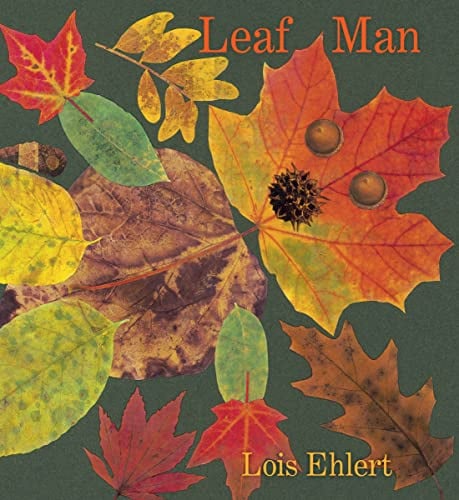
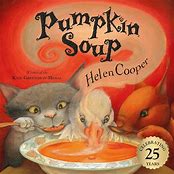
Sharing books and stories to promote a love of reading and talking about books. We will look at The Little Red Hen and use this to lead into making bread. We will also look at information books on Autumn, leaves and trees to link with developing understanding of the world around us. Finally, we will share the story of Pumpkin Soup, giving an opportunity to look at seasonal pumpkins and to talk about the theme of friendship.

We will cover all Phase 1 phonics in a couple of weeks based on practical ideas from Pearson Bug Club phonics. The aim is to develop listening skills and a tuning into sounds and rhyme. Then we will begin to teach Phase 2 letter sounds in groups of 4. Our learning will be based upon letter recognition, identification of these sounds in words and letter formation. We will also introduce the idea of blending and segmenting words with these sounds in order to read simple words.
Phonics workshop date to be confirmed.
Please see the support materials sent home each week and don’t forget to make use of the Bug Club website and allocated phonic books.
Matching and sorting
Children will be given opportunities to find out and match objects which are the same.
They will learn that collections of objects can be sorted into sets based on attributes such as colour, size or shape. Sorting enables children to consider what is the same and what is different to other sets. They will begin to understand that the same collection of objects can be sorted in different ways and will be encouraged to come up with their own criteria for sorting objects into sets.
Making Comparisons
Children will be encouraged to sort collections into sets, they will learn that these sets can be compared and ordered. They will be taught to see that when making comparisons a set can have more items, fewer items or the same amount of items as another set.
Subitising
Children will be encouraged to develop their ability to subitise through a variety of contexts and activities.
What is subitising?
Subitising is when you are able to look at a group of objects and realise how many there are without counting.
Perceptual subitising
This is the ability to recognise the number of objects in front of you without using any mathematical process – it’s instinctual.
Conceptual subitising
This is where you are able to recognise a number by grouping into small sets. For example, if you are shown a line of 6 black dots, it’s likely that you will automatically group these into 2 groups of 3, and then know that there are 6 in total without actually counting each one.
Counting, cardinality and ordinality
Children will engage with activities that draw attention to the purpose of counting – to find out ‘how many’ objects there are. They have used subitising to identify the number in a set; they will now develop their counting skills to enable them to identify how many there are in a set that cannot be subitised. This connects subitising and counting to cardinality whereby the last number in the count tells us ‘how many’ things there are altogether. They will also practise developing 1:1 correspondence, by counting numbers at the same time as moving or tagging the objects. Using active gestures, such as indicating with a wand, will help to make this link explicit.
Composition
Children will explore how numbers can be composed of 1s and, from this, begin to investigate the composition of 3 and 4. Composing and de-composing numbers involves children investigating part–whole relations, e.g. seeing that 3 can be composed of 1 and 2. The children will learn from practical experience that a ‘whole’ is made up of smaller parts and is, therefore, bigger than its parts.
Developing relationships between the children and adults in the team and to gain an awareness of how we share, take turns and look after each other to make our classrooms a happy place.
This area will focus on developing gross motor skills through activities designed to strengthen muscles and engage in physical games outside. Fine motor skills and pencil grip will be developed through opportunities to make patterns, trace, thread, use dough and other malleable materials and to use a variety of tools in different contexts.
Let’s talk! Using talk in play, to tell others about experiences, feelings and responding to stories. We want our children to feel confident to converse with us, their peers, in small groups and with the whole class. This journey starts now.
We have been sent some advice on how to develop communication and language in the home. Please click here to find out more.
Our aim is to offer our children the opportunity to explore different tools, materials and techniques through our play provision. They will also have the chance to learn some new songs and to add movement to music.
The children will be given a reading book linked to their current phonic knowledge and this will be changed every Friday.
In addition, they will also be given a wider reading book from a range of reading schemes including Oxford Reading Tree, Big Cat and Song Birds. These will be changed on Wednesdays. Please use the blue reading record to make any comments. Library books are changed on Thursdays.
As part of our Bug Club Phonics, we are delighted to offer a range of online reading books which you can access at any time.
PE kit needs to be worn to school every Thursday.
Home learning is sent home every Friday for the children to complete if they wish.
In Early Years our topics are led by the interests of the children. Throughout the year we will incorporate celebrations, seasons and specific books. Our planning is guided by the Early Years Curriculum for each of the 7 areas of learning-Literacy, Mathematics, Communication and Language, Physical, Personal and Social, Understanding the World and Expressive Arts and Design.
For more information about the Early Years curriculum please click here.


For more information about the Early Years curriculum please click here.